
Finding the Goldilocks Zone in Your Proteins!
- Taner Karagol

- Feb 6
- 1 min read
In astronomy, the Goldilocks Zone is that perfect, habitable distance from a star: not too hot, not too cold, but just right for life to exist. In our latest research, we discovered that proteins have a Biophysical Goldilocks Zone too, and it changes how we understand disease mechanisms.
For years, we assumed that if a part of a protein was evolutionarily conserved, it had to be a stable, immovable anchor. But this binary view misses the most sophisticated machinery of the cell. Today, our latest research challenges that binary view.
We identified a critical population of residues that are evolutionarily frozen in time specifically to facilitate motion. Interestingly, we found that this specific zone is 𝘪𝘯𝘵𝘦𝘳𝘮𝘦𝘥𝘪𝘢𝘵𝘦𝘭𝘺 𝘳𝘦𝘴𝘪𝘴𝘵𝘢𝘯𝘵 𝘵𝘰 𝘮𝘶𝘵𝘢𝘵𝘪𝘰𝘯𝘴 (the Biophysical Goldilocks Zone). They are the molecular hinges and gates remain mobile for the protein to work, yet they are highly conserved.
Our study comparing 737 human variants from ClinVar revealed that standard predictors may 𝗺𝗶𝘀𝗰𝗹𝗮𝘀𝘀𝗶𝗳𝘆 𝘃𝗮𝗿𝗶𝗮𝗻𝘁𝘀 𝗶𝗻 𝘁𝗵𝗶𝘀 𝘇𝗼𝗻𝗲 𝗮𝘀 𝗯𝗲𝗻𝗶𝗴𝗻. Because these regions look flexible, algorithms may assume they are safe to mutate. They are wrong.
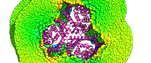
The attached conceptual image (𝘨𝘦𝘯𝘦𝘳𝘢𝘵𝘦𝘥 𝘶𝘴𝘪𝘯𝘨 𝘕𝘢𝘯𝘰 𝘉𝘢𝘯𝘢𝘯𝘢 𝘗𝘳𝘰) visualizes this region. It maps out the residues that are conserved but dynamic. Understanding this zone is the key to solving "𝗩𝗮𝗿𝗶𝗮𝗻𝘁𝘀 𝗼𝗳 𝗨𝗻𝗰𝗲𝗿𝘁𝗮𝗶𝗻 𝗦𝗶𝗴𝗻𝗶𝗳𝗶𝗰𝗮𝗻𝗰𝗲" When a mutation hits here, it doesn't fully break the structure, it jams the engine.
Pre-print Link: https://www.biorxiv.org/content/10.64898/2026.01.16.699945v1


Comments