
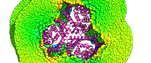
Designing Antibacterial Targets: Water-Soluble Bacterial Enzymes
In our newly published paper, our team explored a way to study the complex structures of seven bacterial alpha-helical integral membrane enzymes, including critical targets like PlsY, PgpB, and Lit from bacteria such as Escherichia coli and Bacillus cereus.
These proteins carry out critical catalytic functions in cellular communication, making them essential targets for developing new therapeutic interventions and antimicrobial drugs. However, studying integral membrane proteins presents a major challenge in structural biology due to their poor solubility in aqueous environments. The QTY code systematically substitutes hydrophobic amino acids with hydrophilic ones, transforming water-insoluble proteins into water-soluble variants. My role focused on testing the viability of these modified bacterial enzymes. The simulation results demonstrated that the QTY variants retained stable dynamics that closely mimic their natural, membrane-bound forms.
The ability to create stable, water-soluble bacterial membrane enzymes has significant implications for structural bioinformatics and pharmacology. It provides a highly practical method to study bacterial membrane proteins without relying on complex detergent environments, which will accelerate the design of targeted antimicrobial treatments and advance our understanding of fundamental biological processes. The full structural analyses and methodology are available in our publication.
Sajeev-Sheeja, A., Karagöl, A., Karagöl, T., & Zhang, S. (2025). Molecular dynamics simulations and structural bioinformatics of bacterial integral alpha-helical membrane enzymes and their AlphaFold2-predicted water-soluble QTY analogues. Molecular Simulation, 51(15), 984-998. https://doi.org/10.1080/08927022.2025.2562932


Comments