
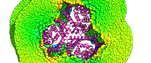
Engineering the Neurotransmitter Transporters: Glutamate and Serotonin
Our foundational research on the structural bioinformatics of glutamate and monoamine transporters established the core methodology we use to bypass the membrane barrier. These publications detail the application of the QTY code to engineer water soluble variants of these critical neurotransmitter transporters.
By systematically replacing hydrophobic amino acids with structurally similar hydrophilic residues, we demonstrated that the proteins can become soluble while preserving their complex three dimensional architecture. AlphaFold2 predictions verified that these QTY variants maintain the original molecular fold of the membrane bound versions.
These studies provide a practical framework for more accessible biochemical analysis and structure based drug design. Both publications are available via open access and remain central to our work in computational protein engineering.
Read the full open access publications in PLOS ONE:
Karagöl A, Karagöl T, Smorodina E, Zhang S (2024). Structural bioinformatics studies of glutamate transporters and their AlphaFold2 predicted water-soluble QTY variants and uncovering the natural mutations of L->Q, I->T, F->Y and Q->L, T->I and Y->F. PLOS ONE 19(4): e0289644. DOI: 10.1371/journal.pone.0289644
Karagöl T, Karagöl A, Zhang S (2024). Structural bioinformatics studies of serotonin, dopamine and norepinephrine transporters and their AlphaFold2 predicted water-soluble QTY variants and uncovering the natural mutations of L->Q, I->T, F->Y and Q->L, T->I and Y->F. PLOS ONE 19(3): e0300340. DOI: 10.1371/journal.pone.0300340


Comments