
Late-Breaking Presentations at Neuroscience 2025
We participated in the Society for Neuroscience (SfN) Annual Meeting, Neuroscience 2025 and shared our recent findings through two late-breaking presentations.
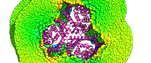
The first presentation focused on the Computational design of lipid-soluble ApoE N-terminal segment using reverse-QTY code. In this work, we utilized a "reverse-QTY" strategy to computationally engineer lipid-soluble protein segments. This approach allowed us to analyze the N-terminal dynamics of ApoE within a lipid environment, which is critical for understanding its functional role in lipid metabolism and neurobiology.
The second presentation was titled Helix-to-β-Sheet Transitions in Glutamate Transporter EAA1 Splice Isoforms Drive Oligomeric Self-Assemblies and Reveal Conserved Evolutionary Motifs. In this session, we detailed how alternative splicing in EAA1 transporters triggers a conformational shift where native alpha helices transition into β-sheet formations. Our analysis also identified conserved evolutionary motifs that regulate these dynamics, providing a structural framework for understanding protein aggregation in neurobiological contexts.
Both of our submissions were recognized as late-breaking research. A big thank-you to the Society for Neuroscience for making this exciting event possible, and for waiving the submission fees for our research. The technical discussions and feedback from the international neuroscience community were invaluable.


Comments