
Near-Million-Atom Modeling Exposes Pan-Family Inhibition in Neurological Membrane Transporters
- 3 days ago
- 1 min read
My recent study explores how alternative splicing regulates critical membrane transporters, specifically focusing on serotonin, dopamine, and norepinephrine transporter assemblies. Proper assembly of these monoamine transporters is essential for neurotransmission, yet the regulatory influence of naturally occurring truncated isoforms on this process remains profoundly underexplored.
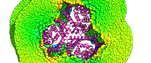
To decode these atomic-level interactions, we integrated genomics-guided predictions with massive near-million-atom molecular dynamics simulations. The analysis revealed that a specific norepinephrine transporter truncation isoform acts as a selective pan-family inhibitor. It thermodynamically outcompetes native homodimerization in dopamine and norepinephrine transporters, and it induces macro-structural disruptions within the serotonin transporter complex by locking the assembly into an asymmetric state.
By exposing these non-canonical interfaces as highly druggable targets, this high-resolution modeling offers a new pharmacological paradigm for precision interventions in neuropsychiatric pathologies.
Karagöl, T., & Karagöl, A. (2026). Serotonin, dopamine, and norepinephrine transporter assembly is selectively disrupted by a NET truncation isoform as revealed through near-million-atom simulations. bioRxiv, 2026-03.



Comments