
Microenvironmental pH and Host-Pathogen Evolution: The Architecture of JAMs
- May 15
- 1 min read
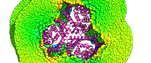
Our new article, accepted in Molecular Genetics and Genomics, investigates how physiological environments and evolutionary pressures shape critical barrier proteins. In this study, we (Alper and Taner Karagöl) explored the structural dynamics of Junctional Adhesion Molecules across 274 mammalian taxa.
To decode these adaptations, we developed a multi-scale framework. We merged maximum-likelihood phylogenetic modeling, network topology analysis, and molecular dynamics simulations across a pH gradient ranging from 6.5 to 10.5.
Our analysis revealed that JAM-B acts as the central evolutionary node for the paralog family. We also identified an active host-pathogen arms race at the viral entry interfaces within the distal D1 domain of JAM-A. Furthermore, our simulations established a link between the isoelectric point of these proteins and their structural stability under varying pH conditions. This integrated approach offers a architectural blueprint to guide future targeted mutagenesis and therapeutic engineering.


Comments