
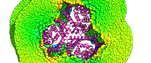
Uncoupling Structural Rigidity from Functional Motion in Variant Interpretation & Evolution
Our new paper detailing how protein dynamics and evolutionary conservation intersect to govern mutational intolerance is now published in Functional & Integrative Genomics. Traditional computational tools and clinical classifiers frequently treat proteins as static scaffolds, assuming that evolutionary conservation is strictly tied to rigid structural stability. However, proteins function as dynamic molecular machines whose biological tasks depend on atomic flexibility and conformational transitions.
Our study introduces Dynamics-Aware Evolutionary Profiling (DEP). By integrating atomistic molecular dynamics trajectories with deep evolutionary coupling analysis across 151 protein structures and over 30,000 residues, we mathematically uncoupled structural rigidity from functional motion.
This framework establishes two statistically independent metrics: the Rigid Conserved Score (RCS) to isolate the hydrophobic structural core (enriched in Trp, Cys, and Leu), and the Dynamic Conserved Score (DCS) to identify evolutionarily constrained flexible residues (enriched in Gly, Pro, and Met). Our analysis demonstrates that stability and motion operate as orthogonal biophysical forces (ρ≈0.08), revealing that standard static conservation metrics capture only half of the evolutionary constraint landscape.
A central finding of our work is the clinical utility of this distinction. When benchmarked against 737 human disease variants from ClinVar, DCS surfaced pathogenic mutations located in flexible regions (including cases in NARS1 and PGK1) that static deep learning predictors like AlphaMissense classified as benign or ambiguous.
These high-DCS residues delineate a "Biophysical Goldilocks Zone" of flexible mechanical switches, providing tunable sites for allosteric drug design and offering a targeted filter to resolve Variants of Uncertain Significance (VUS).
To support open science and reproducible workflows, we also developed ADEPT, a free, browser-based web server operating entirely on the client side.
Karagöl, T., & Karagöl, A. (2026). Dynamics-aware evolutionary profiling uncouples structural rigidity from functional motion to enable enhanced variant interpretation. Functional & Integrative Genomics, 26(1), 228. https://doi.org/10.1007/s10142-026-02013-9
Web Server: https://www.karagolresearch.com/adept


Comments